A broken bone or an injury from an accident is frightening and disorienting and what you want in that moment is simple: prompt, competent care from someone who handles these every day. Orthopedic trauma covers exactly these fractures, dislocations and injuries to bones, joints and the soft tissue around them, usually after a fall, a road accident or a sports injury. At PMG Hospital, an NABH-certified orthopedic trauma hospital in Ahmedabad, these injuries are managed by Dr. Hiren Patel, for patients across Gujarat from a single clean break to complex, multiple fractures. This page explains how fractures are treated, when surgery is needed, and the specific trauma care we provide.
What Is Orthopedic Trauma?
Orthopedic trauma is any injury to the musculoskeletal system, the bones, joints, ligaments and muscles. It ranges from a simple, stable fracture that heals in a cast to complex, high-energy injuries with several broken bones at once. Most happen from road accidents, falls and sports, though people with weak bones from osteoporosis can fracture from surprisingly minor knocks (a "fragility fracture"). Good orthopedic trauma treatment in Ahmedabad has one aim throughout: get the bone back into good alignment, hold it stable while it heals, and restore movement as early and safely as possible.
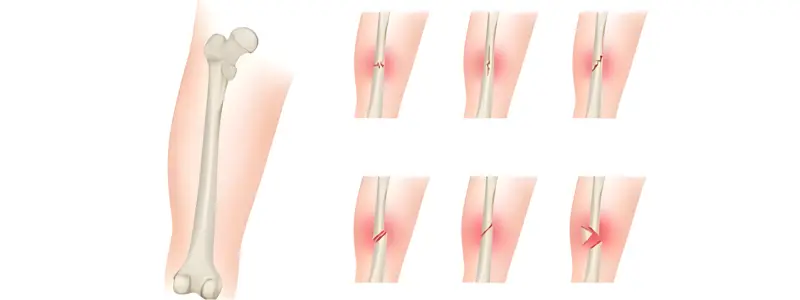
Types of Fractures
Not all breaks are the same, and the type shapes the treatment.
| Type | What it means |
|---|---|
| Closed fracture | The bone breaks but the skin stays intact |
| Open (compound) fracture | The bone breaks through the skin urgent, with infection risk |
| Displaced fracture | The broken ends are out of alignment |
| Comminuted fracture | The bone breaks into several pieces |
| Stress (hairline) fracture | A fine crack from repetitive overload |
| Greenstick fracture | An incomplete break, common in children |
Does a Fracture Need Surgery or a Cast?
This is the first question most people have, and the honest answer is: many fractures don't need surgery. A stable, well-aligned break often heals perfectly well in a cast or splint after being set (a "closed reduction"). Surgery becomes the better option when the bone is displaced or unstable, when it's an open fracture, when the break runs into a joint surface, or when there are multiple injuries.
| Often treated with a cast/splint | Usually needs surgery |
|---|---|
| Stable, well-aligned fractures | Displaced or unstable fractures |
| Simple closed fractures | Open (compound) fractures |
| Many childhood fractures | Fractures running into a joint |
| - | Multiple fractures or major trauma |
The decision is made from your X-rays and the pattern of the break not by defaulting to an operation.
How Fractures Are Fixed - Surgical Techniques
When surgery is needed, the method is matched to the fracture. The modern goal is fixation stable enough to let you start moving early, rather than being immobilised for months.
| Technique | What it is | Often used for |
|---|---|---|
| ORIF (plates & screws) | The bone is realigned and fixed with a plate and screws | Many displaced and joint fractures |
| Intramedullary nailing | A metal rod is placed inside the bone's canal | Long-bone fractures; often allows early weight-bearing |
| MIPO (minimally invasive plating) | A plate is slid in through small incisions | Fractures near joints, with less soft-tissue disruption |
| External fixation | A frame outside the limb holds the bone | Open or severely contaminated fractures |
For children and some small bones, K-wires and specialised paediatric implants are used to respect the growing skeleton.
Trauma Care We Provide
Orthopedic trauma is broad, so our care is organised by the part of the body injured each has its own detailed page.
Knee Trauma
Fractures around the knee, kneecap injuries, and ligament/soft-tissue trauma - see Knee Trauma Surgery.
Hip Trauma
Hip fractures (common and time-sensitive in older adults) and pelvic injuries - see Hip Trauma Surgery.
Shoulder & Elbow Trauma
Collarbone, shoulder and elbow fractures and dislocations - see Shoulder & Elbow Trauma Surgery.
Bone Fracture Surgery
General fracture fixation across the arms, legs and long bones - see Bone Fracture Surgery.
Polytrauma
Multiple serious injuries from high-energy accidents, needing coordinated, prioritised care - see Polytrauma Surgery.
When a Fracture Doesn't Heal (Nonunion)
Most fractures heal, but occasionally one is slow to knit (a delayed union) or fails to heal at all (a nonunion) more likely in smokers, in people with diabetes or poor blood supply, or after a severe open fracture. It's treatable: options include revising the fixation to make it more stable, and bone grafting to kick-start healing. If a break that should have healed is still painful months later, it's worth having it reviewed rather than waiting.
Recovery After Fracture Surgery
Recovery depends on which bone broke, how it was fixed, and your general bone health. Modern fixation is designed to allow early, protected movement which reduces stiffness and speeds the return of function with physiotherapy guiding the way. Most straightforward fractures unite over about six to twelve weeks, though larger or complex injuries take longer, and full strength continues to improve after that. For older patients, treating the underlying osteoporosis is part of preventing the next fracture. Patients travelling from across Gujarat have recovery coordinated into their plan.
Fracture & Trauma Surgery Cost in Ahmedabad
Fracture surgery cost varies with the bone, the fixation used and the complexity of the injury. As a general guide, fracture surgery in Ahmedabad commonly ranges from about ₹1.2 - 1.8 lakh, with complex, multiple or open fractures which need more hardware and longer care costing more and quoted individually. The implants used (plate, nail or external fixator) are a major factor. Trauma care is usually covered by mediclaim and health insurance, and many patients are eligible for government schemes; it's worth checking. These are general market ranges for an exact estimate, please consult our team.
Meet Dr. Hiren Patel - Orthopedic Trauma Surgeon in Ahmedabad
A broken bone rewards two things: the right fixation for that specific fracture, and getting it done promptly so the bone heals in a good position. Dr. Hiren Patel has spent his career on both. As an orthopedic trauma surgeon and specialist in Ahmedabad 14+ years and 14,000+ orthopedic surgeries, with an MS (Orthopaedics) from B.J. Medical College, Ahmedabad he manages the full range of fractures, from a straightforward long-bone break fixed with a nail to complex joint fractures and multiple injuries. Where a fracture will heal well in a cast, he'll say so; where it needs surgery, he chooses the technique that lets you start moving soonest.
Why Patients Across Gujarat Choose PMG Hospital
When you've broken a bone, you want a straight answer and prompt treatment so as an orthopedic trauma hospital in Ahmedabad, PMG keeps it simple: quick assessment with in-house X-ray, an honest call on whether it needs a cast or surgery, and the fixation technique best suited to the fracture. As a fracture surgery hospital in Ahmedabad with an in-house physiotherapy team, recovery is planned from day one, and NABH-certified standards apply throughout. From an isolated fracture to complex, multiple injuries, patients come from across Gujarat including Mahesana, Kadi and Visnagar and a second opinion on a fracture or its fixation is always available.
Frequently Asked Questions
Does every fracture need surgery?
No - many don't. A stable, well-aligned fracture often heals well in a cast or splint after being set. Surgery is chosen when the bone is displaced or unstable, when it's an open fracture, when the break runs into a joint, or when there are multiple injuries. The decision is made from your X-rays and the fracture pattern, not by default.
What's the difference between a closed and an open fracture?
In a closed fracture the bone breaks but the skin stays intact. In an open (compound) fracture the broken bone pierces the skin, which is a surgical emergency because of the high risk of infection - it needs prompt cleaning and fixation. Open fractures almost always require surgery, while many closed fractures can be treated without it.
How are broken bones fixed with surgery?
Depending on the fracture, the bone may be realigned and held with a plate and screws (ORIF), a rod inside the bone (intramedullary nailing, often for long bones), a plate slid in through small incisions (MIPO), or a frame outside the limb (external fixation, for open injuries). The method is matched to the fracture to allow the earliest safe movement.
How long does a fracture take to heal?
Most straightforward fractures unite over about six to twelve weeks, though it varies with the bone, the person's age and bone health, and how the fracture was treated. Larger or complex injuries take longer, and strength keeps improving after the bone has united. Physiotherapy helps restore movement and function during and after healing.
What is a nonunion?
A nonunion is a fracture that fails to heal, and a delayed union is one that's slow to knit. It's more likely in smokers, in people with diabetes or poor blood supply, or after severe injuries. It's treatable - usually by revising the fixation to make it more stable and adding a bone graft to stimulate healing. Persistent pain months after a break should be reviewed.
How much does fracture surgery cost in Ahmedabad?
Fracture surgery in Ahmedabad commonly ranges from about ₹1.2–1.8 lakh, depending on the bone, the fixation used and the complexity. Complex, multiple or open fractures cost more and are quoted individually, and the implant (plate, nail or fixator) is a major factor. Trauma care is usually covered by insurance and often by government schemes. Consult us for an exact estimate.
Do you handle emergency and accident trauma?
Yes. Orthopedic trauma often arrives urgently, and PMG manages fractures and injuries from accidents, falls and sports - from isolated breaks to multiple injuries - with prompt assessment, in-house imaging and appropriate fixation. For a major, life-threatening emergency, the nearest emergency facility should always be reached first; PMG then provides the orthopedic trauma treatment and reconstruction.
When should I see an orthopedic trauma surgeon in Ahmedabad?
See an orthopedic trauma surgeon in Ahmedabad promptly after any significant injury with pain, swelling, deformity or inability to use the limb, or if a fracture already treated isn't healing or is healing crooked. Early, correct treatment gives the best chance of the bone healing in good position and of a full return of function.
Talk to Our Orthopedic Team
If you or a family member has broken a bone or been injured in an accident, prompt, experienced care makes a real difference. Bring the X-rays and reports and we'll advise the right treatment cast or surgery. Call or WhatsApp +91 96627 70141, email pmghospital.ahm@gmail.com, or visit PMG Hospital at 3rd Floor, Athena Avenue, B/H Jaguar Showroom, near Eulogia Inn Hotel, Gota, S G Highway, Ahmedabad.