
A broken hip in later life is frightening for the person and the family around them and the questions come fast: will they walk again, and how soon? For many hip fractures, partial hip replacement (hemiarthroplasty) is the most reliable answer, replacing only the damaged ball of the joint so the patient can get moving again quickly and safely. PMG Hospital is an NABH-certified partial hip replacement hospital in Ahmedabad caring for patients across Gujarat, and these cases are handled by partial hip replacement doctor in Ahmedabad, Dr. Hiren Patel. This page explains when the procedure is the right choice, how it's done, and what recovery realistically looks like.
What Is Partial Hip Replacement (Hemiarthroplasty)?
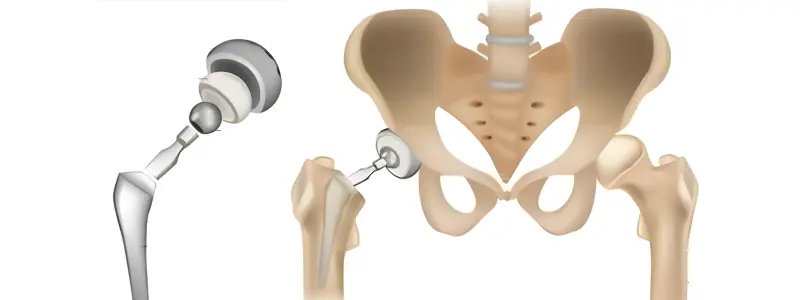
In a partial hip replacement, the surgeon removes the damaged femoral head and the ball at the top of the thigh bone and replaces it with an artificial implant, usually a metal stem topped with a metal or ceramic ball. Crucially, the natural socket (the acetabulum in the pelvis) is left in place. That's what makes the procedure "partial," and less invasive than a total hip replacement. Because only one side of the joint is replaced, it's a shorter, gentler operation with a lower risk of dislocation the right choice specifically when the socket is still healthy and only the ball is damaged.
When Is Partial Hip Replacement Needed?
Partial hip replacement is most often needed after a displaced femoral neck fracture, a type of broken hip especially in older adults with weaker, osteoporotic bone. In these fractures the blood supply to the femoral head is usually disrupted, so the bone is unlikely to heal on its own, and replacing the ball offers the fastest, most reliable route back to walking.
You may be a good candidate if:
- You have a displaced femoral neck fracture (broken hip)
- Your hip socket (acetabulum) is still healthy and undamaged
- You are an older or less active adult for whom a shorter, lower-risk surgery is safer
- The blood supply to the femoral head has been compromised by the injury
If the hip is worn by arthritis, a total hip replacement is usually the better option, because the socket is worn too and also needs replacing. One important nuance: for fitter, more active older adults, current evidence suggests a total hip replacement can give better long-term function even after a fracture which is why an accurate assessment by an experienced surgeon decides the right operation, not a fixed rule.
How Is Partial Hip Replacement Performed?
Partial hip replacement is usually done under spinal or general anaesthesia and takes about 1 to 2 hours:
- Incision - a cut on the side or front of the hip to reach the joint.
- Removal - the fractured or damaged femoral head is carefully removed.
- Implant placement - a metal stem is fitted into the femur, topped with an artificial ball.
- Preserving the socket - the natural acetabulum is left intact, with the new ball resting inside it.
- Closure - muscles and tissues are repositioned and the incision is closed.
The artificial ball is either unipolar (a single head) or bipolar (with an extra inner bearing that moves too, reducing wear on the natural socket). The choice depends on the patient's age, activity and bone quality.
| Unipolar hemiarthroplasty | Bipolar hemiarthroplasty | |
|---|---|---|
| Design | Single fixed head | Head with an extra inner bearing |
| Socket wear | Slightly more contact with the socket | Extra bearing reduces socket wear |
| Often chosen for | Less active, older patients | Patients expected to be more mobile |
Partial vs Total Hip Replacement - Which Is Right?
| Partial (Hemiarthroplasty) | Total Hip Replacement | |
|---|---|---|
| What's replaced | Only the ball; socket kept | Both ball and socket |
| Best for | Hip fractures with a healthy socket | Arthritis, AVN, or a worn socket |
| Operation | Shorter, gentler | Longer, more extensive |
| Dislocation risk | Lower | Slightly higher |
| Recovery | Faster for frail patients | Excellent function, esp. for active patients |
| Typical suitability | Older, less active adults | Younger or more active adults |
Recovery After Partial Hip Replacement
For an older patient after a fracture, the priority is getting up and moving early long bed rest carries its own risks (chest infections, clots, pressure sores), so gentle, supported walking usually begins within a day or two. Most patients stay in hospital for a few days, then continue with guided physiotherapy.
| Timeframe | What typically happens |
|---|---|
| Day 1–2 | Assisted standing and first steps to avoid the risks of bed rest |
| First week | Short hospital stay; walking with a walker or frame |
| Weeks 2–6 | Steady progress with physiotherapy; more independence at home |
| 6–12 weeks | Return toward pre-injury activity, guided by fitness |
| A few months | Fuller recovery, depending on age and overall health |
Recovery depends heavily on how independent and healthy the person was before the fracture this is a general guide, not a fixed timetable. Patients from Mahesana, Rajkot, Visnagar, Kadi and beyond have recovery and follow-up coordinated accordingly.
What Partial Hip Replacement Costs in Ahmedabad
Partial hip replacement is generally less expensive than a total, because only one part of the joint is replaced and the operation is shorter. Across reputed private hospitals in Ahmedabad, it typically ranges from about ₹1.5–3 lakh, depending on the implant type (unipolar or bipolar), the surgical method, the length of hospital stay, and any existing health conditions which are common in older fracture patients. Most cases are covered under mediclaim and health insurance. These are general market ranges; for an itemised estimate for your case, please consult our team.
Meet Dr. Hiren Patel - Partial Hip Replacement Specialist in Ahmedabad
A broken hip in an older adult is as much a race against time as an operation. The sooner someone is safely back on their feet, the better they tend to do. Dr. Hiren Patel's work spans both the trauma and the joint-replacement sides of that problem, with more than 14 years of practice and 14,000+ surgeries behind him. As Director and Head Joint Replacement Surgeon at PMG Hospital MS (Orthopaedics), B.J. Medical College, with fellowships across four countries he plans each hemiarthroplasty personally, with one clear priority for older fracture patients: getting them mobile again quickly and safely.
Why Patients Across Gujarat Choose PMG Hospital
A hip fracture doesn't wait, and neither should its care. Families across Gujarat bring older relatives to PMG for exactly that prompt assessment, surgery planned around the realities of frailty and other health conditions, and NABH-certified standards that matter most when a patient is at their most vulnerable. Care is led directly by an experienced surgeon, physiotherapy starts early to protect against the complications of bed rest, and the team stays in touch through recovery. The aim is a safe, steady return to independence.
Frequently Asked Questions
What is partial hip replacement (hemiarthroplasty)?
Partial hip replacement replaces only the damaged ball (femoral head) of the hip with an artificial implant, while leaving the natural socket in place. It's less invasive than a total hip replacement, with a shorter operation and lower dislocation risk. It's used mainly for hip fractures where the socket is still healthy.
When is partial hip replacement recommended?
It's most often recommended after a displaced femoral neck fracture, especially in older adults with weaker bone, where the blood supply to the ball is disrupted and the bone won't heal on its own. It suits patients whose socket is healthy and who benefit from a shorter, lower-risk operation. An assessment confirms suitability.
Partial or total hip replacement - which is right for me?
Partial replacement suits hip fractures with a healthy socket, particularly in older, less active patients. Total replacement suits arthritis or a worn socket, and often gives better long-term function in younger or more active patients - including some fitter older adults after a fracture. The right choice depends on your bone, activity level and health.
What's the difference between unipolar and bipolar hemiarthroplasty?
Both replace the ball of the hip. A unipolar implant has a single fixed head, while a bipolar implant has an extra inner bearing that also moves, which reduces wear on the natural socket. Bipolar is often chosen for patients expected to be more mobile; unipolar for less active patients. Your surgeon selects based on your needs.
How long is recovery after partial hip replacement?
Most patients begin assisted walking within a day or two - early movement is important to avoid the risks of bed rest - and stay in hospital a few days. Independence at home improves over the following weeks with physiotherapy, with fuller recovery over a few months. It depends heavily on health and fitness before the fracture.
Is partial hip replacement safer for older patients?
For many frail or older patients, a shorter, gentler operation with a lower dislocation risk is the safer choice, and it gets them moving again quickly. However, fitter, more active older adults may do better long-term with a total hip replacement. Safety depends on the individual, so a careful pre-surgery assessment guides the decision.
How soon after a hip fracture should surgery be done?
Where the patient is medically fit, hip-fracture surgery is generally recommended promptly - commonly within 24 to 48 hours - because earlier surgery is linked to better recovery and fewer complications. Any existing health conditions are stabilised first. Prompt assessment is why timely specialist care matters so much after a broken hip.
How much does partial hip replacement cost in Ahmedabad?
Partial hip replacement in Ahmedabad typically ranges from about ₹1.5–3 lakh - usually less than a total replacement - depending on the implant (unipolar or bipolar), method and hospital stay. Existing health conditions common in older patients can affect it. Most cases are covered by insurance. Please consult us for an exact estimate.
Talk to Our Orthopedic Team
If an older family member has broken a hip, or you've been advised a partial hip replacement, prompt, experienced care makes a real difference to recovery. Bring the reports and X-rays for an assessment or second opinion. Call or WhatsApp +91 96627 70141, email pmghospital.ahm@gmail.com, or visit PMG Hospital at 3rd Floor, Athena Avenue, B/H Jaguar Showroom, near Eulogia Inn Hotel, Gota, S G Highway, Ahmedabad.