
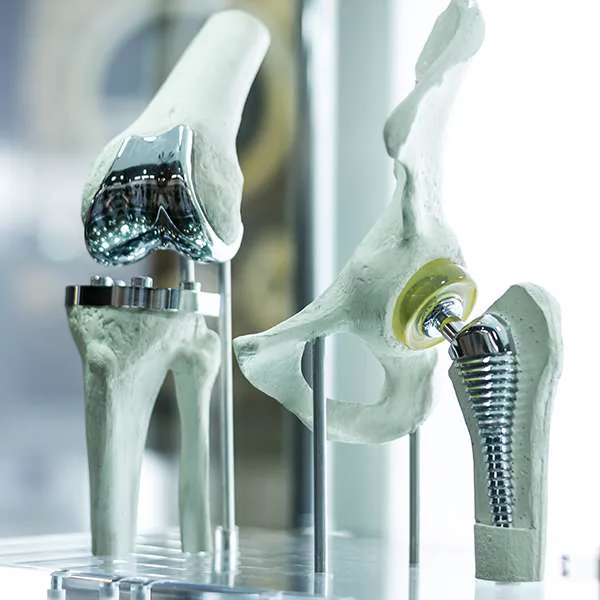
A joint replacement is one of the most successful operations in medicine, and most last 15 to 20 years or more but no implant is guaranteed forever. Years later, a knee, hip or shoulder replacement can loosen, wear out, become unstable, or occasionally get infected, and the pain and difficulty return. Revisional joint replacement is the corrective surgery that puts it right. Revisional joint replacement surgery in Ahmedabad at PMG Hospital covers all three major joints knee, hip and shoulder led by Dr. Hiren Patel, who performs both the primary replacements and the revisions, for patients across Gujarat. It's a more demanding operation than a first-time replacement, and this page explains what's involved for each joint.
What Is Revisional Joint Replacement?
Revisional joint replacement is surgery to replace or repair an artificial joint that has failed removing the old implant and fitting a new one, often with specialised components (stems, augments, and sometimes bone grafting) to restore stability where the original bone support has weakened. It's considerably more complex than a primary replacement, because the surgeon has to work through scar tissue from the first operation, manage bone loss, and where infection is involved, clear it before rebuilding. That's why revisional rewards careful planning and an experienced surgeon far more than a straightforward first replacement does.
Why Do Joint Replacements Fail?
Identifying why an implant failed is the first and most important step, because it shapes the whole revision.
| Cause | What's happening |
|---|---|
| Aseptic loosening | The implant gradually loosens from the bone |
| Wear & osteolysis | The bearing surface wears, and debris weakens nearby bone |
| Infection | Bacteria settle around the implant |
| Instability / dislocation | The joint becomes unstable or slips out of position |
| Periprosthetic fracture | A bone breaks around the implant |
| Stiffness | Restricted, painful movement that limits daily life |
Signs Your Replacement May Be Failing
Whichever joint it is, the warning signs are similar: pain that returns and lingers after years of comfort, a feeling that the joint is loose, unstable or "giving way," swelling or stiffness that won't settle, or any warmth, redness or fever around the joint (which can point to infection and should be checked promptly). Catching a failing replacement early usually makes the revisional simpler so new symptoms in an old replacement are worth having assessed rather than pushing through.
Revisional Knee Replacement
A knee replacement can fail from loosening, wear of the plastic spacer, infection, instability, a fracture around the implant, or stiffness. Sometimes only one component (like the spacer) needs exchanging; often the implant is rebuilt with stems that anchor into the bone and augments that make up for missing bone. Where infection is the cause, a two-stage revisional is usually the infected implant is removed, an antibiotic spacer clears the infection, and a new knee is fitted weeks later. Revisional knee surgery is more demanding than a first replacement and recovery is slower. Read the full Revision Knee Replacement page →
Revisional Hip Replacement
A hip replacement is revised for loosening, bearing wear and the bone weakening around it (osteolysis), infection, recurrent dislocation, or a fracture around the implant. The delicate part is removing the old components through scar tissue without harming the remaining bone; the hip is then rebuilt with longer revisional stems, augments or reinforcement cages, and bone grafting where needed. Infected cases are managed with a two-stage revision. Because a revised hip starts from a more difficult position, lifelong annual X-ray follow-up is recommended to catch any issue early. Read the full Revision Hip Replacement page →
Revisional Shoulder Replacement
A shoulder replacement can fail from loosening (often of the socket component), infection, instability, or a cause specific to the shoulder the rotator cuff giving way after an anatomic replacement. One shoulder revisional pathway is unique and worth knowing: when an anatomic or partial replacement fails, the most reliable solution is often to convert it to a reverse shoulder replacement, which lets the deltoid muscle power the arm instead of the failed cuff. As elsewhere, infected cases are treated with a two-stage revision, and glenoid bone loss is reconstructed with grafts and augments. Read the full Revision Shoulder Replacement page →
| Joint | Common reasons for revision | Key revisional feature |
|---|---|---|
| Knee | Loosening, wear, infection, instability, stiffness | Stems & augments; two-stage for infection |
| Hip | Loosening, osteolysis, recurrent dislocation, fracture, infection | Revisional stems, augments, cages; lifelong X-ray follow-up |
| Shoulder | Loosening, rotator cuff failure, instability, infection | Often converted to a reverse replacement |
The Work-Up - Why Planning Matters
The difference between a good revisional and a difficult one is usually decided before the operation. Every revisional at PMG begins with a thorough work-up: infection screening (because an unrecognised infection changes everything), imaging to map the bone loss, and a reconstruction plan settled in advance including which specialised implants will be needed. Working out exactly why the first implant failed, and planning for it, is what turns a demanding operation into a controlled one. Rushing to surgery without that groundwork is the single most avoidable cause of a revisional going wrong.
Recovery After Revisional Surgery
Recovery after any revisional is slower and more gradual than after a first replacement, and it's honest to expect that. It involves a structured physiotherapy programme and a step-by-step return to activity over several months, with the exact pace depending on the joint, the reason for failure, and how much bone was involved. A knee, hip and shoulder each follow their own rehabilitation path set out in detail on the individual pages but all reward patience and consistency. Patients travelling from across Gujarat have this coordinated into their plan.
Revisional Joint Replacement Cost in Ahmedabad
Revisional costs more than a first-time replacement, because it needs specialised implants, a longer operation and a longer stay and it varies by joint.
| Revision | General cost in Ahmedabad |
|---|---|
| Revision knee replacement | ₹2.5 – 5 lakh |
| Revision hip replacement | ₹3 – 6 lakh |
| Revision shoulder replacement | ₹4 – 8 lakh |
Infected (two-stage) and complex reconstructions sit toward the higher end and are quoted individually. Most mediclaim and health-insurance policies cover medically necessary revision, though some have specific terms so it's worth checking your policy and arranging pre-authorisation. For an exact estimate for your case, please consult our team.
Meet Dr. Hiren Patel - Revisional Joint Replacement Surgeon in Ahmedabad
Revisional is the part of joint replacement where experience counts the most. Every failed implant is different, shaped by why it failed and how much bone is left. Dr. Hiren Patel handles revisions across all three major joints knee, hip and shoulder which matters, because the same challenges (scar tissue, bone loss and infection) recur across them. As a revision joint replacement surgeon Ahmedabad patients are referred to 14+ years, 14,000+ orthopedic surgeries, an MS (Orthopaedics) from B.J. Medical College, Ahmedabad, and international fellowships in knee, hip and shoulder surgery he plans every revisional from a full work-up and settles the plan before the incision, not during it. He is also the revision joint replacement specialist Ahmedabad trusts for complex, failed-implant cases and second opinions.
Why Patients Across Gujarat Choose PMG Hospital
A failing joint replacement needs careful detective work before surgery, not just a bigger operation and that's where PMG's approach shows. As a revision joint replacement hospital Ahmedabad and across Gujarat rely on, every case starts with infection screening, imaging for bone loss, and a plan settled in advance. Because the team handles revisions of the knee, hip and shoulder and performs the primary replacements too you get one place that understands both why the implant failed and how to rebuild it. NABH-certified standards, an in-house physiotherapy team and honest expectations for a demanding operation round it out, and a second opinion is always available.
Frequently Asked Questions
Why do joint replacements fail?
Joint replacements can fail from aseptic loosening, wear of the bearing surface (with bone weakening around it), infection, instability or dislocation, a fracture around the implant, or stiffness. Identifying the exact cause is essential, because an infected implant is managed very differently from one that has simply worn or loosened. This applies across the knee, hip and shoulder.
How do I know if my joint replacement is failing?
If a previously comfortable knee, hip or shoulder replacement develops returning pain, a feeling of looseness or giving way, worsening stiffness or swelling, or any warmth, redness or fever, it should be assessed. Imaging and, where infection is suspected, specific tests confirm whether a revisional is needed. Catching it early usually makes the revisional simpler.
Is revisional surgery riskier than the first replacement?
Yes - revisional is more complex and carries a higher risk of infection, bone-loss challenges and instability, and it takes longer. Those risks are managed with careful infection screening, detailed planning for bone loss, specialised implants and an experienced surgeon. Thorough preparation is what makes a demanding operation as predictable as possible.
How is a failed knee replacement revised?
A failed knee replacement is rebuilt by removing the old implant and fitting new components - often with stems that anchor into the bone and augments that replace missing bone. Sometimes only the plastic spacer is exchanged. Infected knees are treated with a two-stage revision, using an antibiotic spacer before the new implant. Recovery is slower than a first replacement.
How is a failed hip replacement revised?
A failed hip is revised by carefully removing the old components through scar tissue, assessing the bone loss, and rebuilding with longer revisional stems, augments or cages and, where needed, bone grafting. Infected hips are managed with a two-stage revision. Because a revised hip starts from a harder position, lifelong annual X-ray follow-up is recommended to catch problems early.
How is a failed shoulder replacement revised?
A failed shoulder replacement is often best converted to a reverse replacement - especially when the rotator cuff has given way or the socket has loosened - because a reverse design uses the deltoid muscle rather than the cuff. Bone loss is reconstructed with grafts and augments, and infected cases are treated with a two-stage revision. The right approach depends on the cuff, bone stock and cause of failure.
How much does revisional joint replacement cost in Ahmedabad?
Revisional costs more than a first replacement and varies by joint: revisional knee replacement around ₹2.5–5 lakh, revisional hip ₹3–6 lakh, and revisional shoulder ₹4–8 lakh. Infected (two-stage) and complex cases are higher and quoted individually. Most mediclaim policies cover medically necessary revision. Consult us for an exact estimate for your case.
When should I see a revisional joint replacement surgeon in Ahmedabad?
See a revisional joint replacement surgeon in Ahmedabad if an earlier knee, hip or shoulder replacement has become painful, loose or unstable, or shows signs of infection (warmth, swelling, fever), or if another surgeon has recommended a revisional and you'd like a second opinion. Early assessment, with the right work-up, gives the best chance of a straightforward, successful revision.
Talk to Our Orthopedic Team
If an earlier knee, hip or shoulder replacement is causing pain, feels loose or unstable, or you've been told you may need a revision, bring your reports, scans and details of your first surgery for a thorough assessment or a second opinion. Call or WhatsApp +91 96627 70141, email pmghospital.ahm@gmail.com, or visit PMG Hospital at 3rd Floor, Athena Avenue, B/H Jaguar Showroom, near Eulogia Inn Hotel, Gota, S G Highway, Ahmedabad.