
Hip pain has a way of quietly narrowing your world: the walks you shorten, the socks that become a struggle, the nights it interrupts. When the joint is worn enough that medicines, physiotherapy and rest no longer help, hip replacement can give that range back. PMG Hospital is an NABH-certified hip replacement hospital in Ahmedabad caring for patients from across Gujarat, and hip surgery here is performed by hip replacement doctor in Ahmedabad, Dr. Hiren Patel. This page explains what the surgery involves, who genuinely needs it, how recovery works, and what it realistically costs so the decision feels informed, not rushed.
What Is Hip Replacement Surgery?
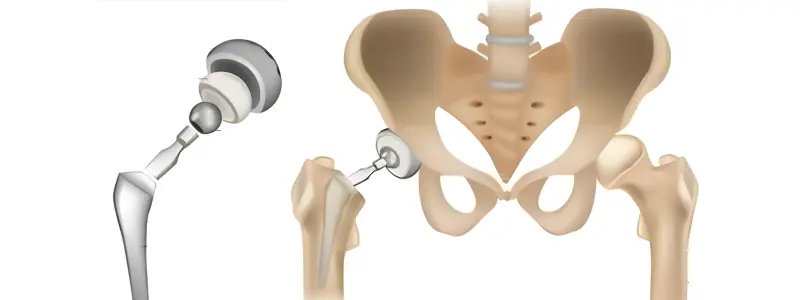
Hip replacement (hip arthroplasty) replaces the worn "ball-and-socket" hip joint with an artificial one. A stem is fixed into the thigh bone (femur) and topped with a metal or ceramic ball, the worn socket is resurfaced with a cup, and a smooth spacer between them recreates an easy, gliding movement. The result, for the right patient, is relief from deep hip pain and a return to comfortable walking, sitting and sleeping. It's one of the most reliable and satisfying operations in orthopedics.
Types of Hip Replacement We Perform
| Type | What it replaces | When it's used |
|---|---|---|
| Total hip replacement | Both the ball and the socket | Worn hip from arthritis or AVN - the most common type |
| Partial (hemiarthroplasty) | Only the ball (femoral head) | Certain hip fractures where the socket is still healthy |
| Revision hip replacement | A failed or worn earlier implant | When a previous hip replacement loosens, wears or fails |
Total Hip Replacement
Also called total hip arthroplasty, this replaces both the ball and socket with metal, ceramic or plastic components. It's the most commonly performed hip replacement and the usual choice for a hip worn down by arthritis or avascular necrosis.
Partial Hip Replacement (Hemiarthroplasty)
This replaces only the femoral head (the ball), leaving the natural socket in place. It's most often used for particular hip fractures in which the socket remains healthy.
Revision Hip Replacement
When an earlier hip implant wears out, loosens or fails, revision surgery corrects it. Like revision knee surgery, it's more complex than a first-time replacement and needs specialised implants and careful planning.
When Is Hip Replacement Needed?
Hip replacement is usually considered when moderate-to-severe hip pain limits everyday life climbing stairs, bending, walking, sometimes even resting and hasn't responded to non-surgical care such as physiotherapy and anti-inflammatory medication. The joint often becomes stiff and loses its range of movement. Osteoarthritis is the most common reason worldwide, but it's worth knowing that in India, avascular necrosis (AVN) where the blood supply to the femoral head is lost is a particularly common cause, and often affects younger adults.
| Common cause | What's happening |
|---|---|
| Osteoarthritis | "Wear and tear" loss of cartilage the most common reason globally |
| Avascular necrosis (AVN) | Loss of blood supply to the femoral head; notably common in India |
| Rheumatoid arthritis | Inflammatory disease that damages the joint |
| Post-traumatic arthritis | Arthritis developing after an earlier hip injury |
| Hip fracture | Especially in older adults; may need partial or total replacement |
An honest evaluation examination plus imaging is what confirms whether surgery is genuinely needed, or whether it can safely wait with non-surgical care.
How Hip Replacement Surgery Is Done
The surgeon makes an incision at the front or side of the hip, removes the damaged bone and cartilage, and rebuilds the joint with prosthetic components. A metal stem is set into the hollow centre of the femur and topped with a metal or ceramic ball that becomes the new "head" of the joint; the worn socket is resurfaced with a cup; and a plastic, ceramic or metal spacer is fitted between ball and socket for smooth movement. The surgical approach (front or side) is chosen to suit your anatomy and case, and it influences which post-operative precautions apply to you.
Recovery After Hip Replacement
Recovery from hip replacement is often comparatively smooth, and many patients are surprised how soon they're up and moving. Most stay in hospital for a few days, start walking early with a walker or assistive device, and build strength through guided exercises.
| Timeframe | What typically happens |
|---|---|
| Days 1–3 (up to a week) | Hospital stay; walking with a walker/aid begins early |
| First few weeks | Strengthening exercises, steady increase in walking |
| Around 6 weeks | Driving again (once cleared); most light daily activities |
| Up to ~6 months | Fuller recovery and strength, even in more severe cases |
This is a general guide: your pace depends on your health, the reason for surgery and how closely you follow the rehabilitation plan. Patients travelling from Mahesana, Rajkot, Visnagar, Kadi, Vijapur or overseas have recovery coordinated with this in mind.
Life After Surgery Hip Precautions
For the first several weeks, a few simple habits protect your new hip while it settles (your surgeon will confirm which apply to your surgical approach):
- Avoid bending your hip past a 90-degree angle, and don't cross your legs
- Don't bend the hip and turn your foot inward at the same time
- Sleep with a pillow between your legs for roughly the first six weeks
- Use an elevated toilet seat and avoid low chairs
- Avoid bending down to pick things up (use a reaching aid)
Your physiotherapist will give you a home exercise programme to strengthen the muscles and ligaments around the hip, and the PMG Hospital team stays in touch after discharge to support your recovery.
How Long Does a Hip Replacement Last?
Modern hip implants commonly last 15 to 20 years or more with proper care, and many people enjoy a comfortable, active hip for two decades or longer. How long yours lasts depends on your activity level, weight and general health and regular follow-up helps protect the result. Under an experienced hip replacement surgeon, success rates are high and outcomes are predictable.
What Hip Replacement Costs in Ahmedabad
Across reputed private hospitals in Ahmedabad, hip replacement generally ranges from about ₹2–4.5 lakh per hip, depending on whether it's a total, partial or revision procedure, the implant chosen, the surgical method and the length of hospital stay. Revision and complex cases sit toward the higher end and are usually quoted individually. Most mediclaim and health-insurance policies cover medically necessary hip replacement, so it's worth checking your policy. These are general market ranges for a clear, itemised estimate for your case, please consult our team.
Meet Dr. Hiren Patel - Hip Replacement Specialist in Ahmedabad
Hips bring their own range of problems: worn joints, fractures, and in India especially, avascular necrosis in younger adults and Dr. Hiren Patel's practice spans all of them, across total, partial and revision replacement. Over more than 14 years he has performed 14,000+ successful surgeries, with an MS (Orthopaedics) from B.J. Medical College, Ahmedabad, and fellowships in South Korea, Switzerland, Italy and France. If another surgeon has already recommended a hip replacement, he's also a sound choice for a considered second opinion.
Why Patients Across Gujarat Choose PMG Hospital
For the hip, patients tend to value PMG for the qualities they'd want in any surgeon they trust: non-surgical options are considered first, the implant is matched to the individual rather than pulled off a shelf, and care is led directly by an experienced hip surgeon under NABH-certified standards. For those coming from Rajkot, Mehsana and further afield, the assessment, surgery and follow-up are coordinated so distance doesn't get in the way of good care.
Frequently Asked Questions
What is hip replacement surgery?
Hip replacement (hip arthroplasty) replaces the worn ball-and-socket hip joint with an artificial one - a stem and ball in the femur, and a cup in the socket, with a smooth spacer between them. It relieves deep hip pain and restores comfortable movement, and is one of the most reliable operations in orthopedics.
What are the types of hip replacement?
There are three main types. Total hip replacement replaces both ball and socket and is the most common. Partial replacement (hemiarthroplasty) replaces only the ball, usually for certain hip fractures. Revision hip replacement corrects a failed or worn earlier implant and is more complex, needing specialised implants and planning.
Who needs a hip replacement?
It's usually considered for moderate-to-severe hip pain that limits walking, bending or sleeping and hasn't responded to physiotherapy or medication. Common causes are osteoarthritis, avascular necrosis (particularly common in India), rheumatoid or post-traumatic arthritis, and hip fractures. Examination and imaging confirm whether surgery is genuinely needed.
How soon can I walk after hip replacement?
Most patients start walking with a walker or assistive device early - often within a day or two of surgery - as part of recovery. Walking distance and confidence build steadily over the following weeks with guided exercises. Early, supported movement is encouraged because it's part of healing, not something to fear.
How long is recovery after hip replacement?
Most patients stay in hospital a few days, resume light daily activities over the first weeks, and drive again around six weeks once cleared. Fuller recovery and strength usually come within about six months, even in more severe cases. Recovery is individual and depends on your health and rehabilitation.
What precautions should I take after hip replacement?
For the first several weeks, avoid bending the hip past 90 degrees, crossing your legs, or turning the foot inward while bending. Sleep with a pillow between your legs, use an elevated toilet seat, and avoid low chairs and bending to pick things up. Your surgeon confirms which precautions apply to your approach.
How long do hip replacement implants last?
Modern hip implants commonly last 15 to 20 years or more with proper care, and many people enjoy an active hip for two decades or longer. Longevity depends on your activity level, weight and general health, and regular follow-up helps protect the result over time.
How much does hip replacement cost in Ahmedabad?
Hip replacement in Ahmedabad generally ranges from about ₹2–4.5 lakh per hip, depending on whether it's total, partial or revision, the implant, method and hospital stay. Revision and complex cases are higher and quoted individually. Most mediclaim policies cover the surgery. Please consult us for an exact estimate.
Talk to Our Orthopedic Team
If hip pain is keeping you from being active or even from sleeping you're welcome to bring your reports and X-rays for an honest assessment or a second opinion, and to leave with a clear plan. Call or WhatsApp +91 96627 70141, email pmghospital.ahm@gmail.com, or visit PMG Hospital at 3rd Floor, Athena Avenue, B/H Jaguar Showroom, near Eulogia Inn Hotel, Gota, S G Highway, Ahmedabad.