
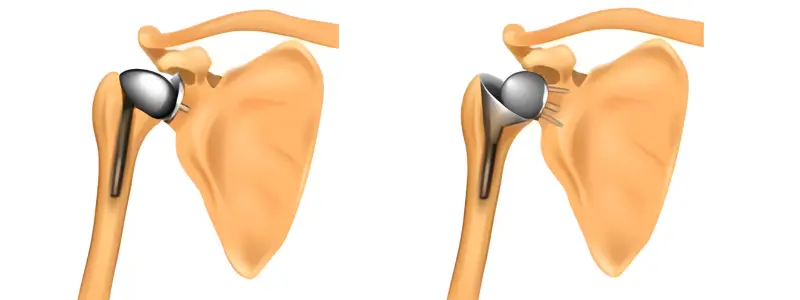
Not every worn or injured shoulder needs the whole joint replaced. When the damage is confined to the ball at the top of the arm while the socket is still healthy a partial shoulder replacement can address just the damaged part and preserve the rest. PMG Hospital is an NABH-certified partial shoulder replacement hospital in Ahmedabad caring for patients across Gujarat, and the procedure is led by partial shoulder replacement doctor in Ahmedabad, Dr. Hiren Patel. Because a partial replacement is only right when the socket is genuinely sound, an accurate assessment is the most important first step.
What Is Partial Shoulder Replacement (Hemiarthroplasty)?
Partial shoulder replacement known medically as hemiarthroplasty replaces only the ball of the shoulder (the humeral head) with an artificial implant, usually a metal ball on a stem, while the natural socket (the glenoid) is left in place. That's what makes it "partial," and less extensive than a total shoulder replacement, which replaces both the ball and the socket. It's the right choice when the damage is limited to the humeral head and the socket surface is still in good condition.
Hemiarthroplasty vs Humeral Head Resurfacing
There are two main ways to replace just the ball, and the choice depends on your bone quality and age.
| Stemmed hemiarthroplasty | Humeral head resurfacing | |
|---|---|---|
| What's fitted | A metal ball on a stem into the arm bone | A cap over the existing humeral head |
| Bone removed | The head is removed | Minimal - the surface is resurfaced |
| Often suits | Most partial cases; weaker bone | Younger patients; preserving bone for the future |
| Advantage | Long, proven track record | Keeps more natural bone if revision is ever needed |
Both leave the natural socket in place; your surgeon advises which suits your shoulder after examination and imaging.
When Is Partial Shoulder Replacement Needed?
Partial shoulder replacement is considered when damage is limited to the humeral head and the glenoid (socket) is still healthy. The situations where it's most useful include osteonecrosis (avascular necrosis) of the humeral head, where the bone's blood supply is lost; certain fractures of the humeral head; and some cases of osteoarthritis in younger patients where the socket is well preserved and keeping natural bone matters for the years ahead. Where the socket is also worn, a total shoulder replacement is usually the better choice; and where the rotator cuff is torn beyond repair, a reverse replacement is preferred. This is exactly why the decision rests on a careful assessment rather than a fixed rule.
Partial vs Total Shoulder Replacement - What's the Difference?
| Partial (Hemiarthroplasty) | Total Shoulder Replacement | |
|---|---|---|
| What's replaced | Only the ball (humeral head) | Both the ball and the socket |
| The socket (glenoid) | Left in place | Resurfaced with a plastic component |
| Best for | Ball-only damage, healthy socket | Arthritis affecting the whole joint |
| Bone preserved | More (especially with resurfacing) | Less |
| Typical situations | AVN, some fractures, younger patients | Widespread shoulder arthritis |
How Partial Shoulder Replacement Is Performed
Under anaesthesia (often with a nerve block for comfort), the surgeon reaches the shoulder joint and addresses the damaged humeral head either removing it and fitting a stemmed metal ball, or resurfacing it with a cap in the bone-preserving approach. The natural glenoid socket is checked and left in place. The incision is then closed and a sterile dressing applied, and monitored recovery begins. The operation usually takes a couple of hours, and the exact technique is chosen to fit your shoulder.
Recovery After Partial Shoulder Replacement
Shoulder recovery takes patience and yes, physiotherapy is an essential part of it, not an optional extra. Most patients go home within a couple of days, with the arm supported in a sling for roughly 2 to 4 weeks while early healing takes place.
| Timeframe | What typically happens |
|---|---|
| First few days | Short hospital stay; arm in a sling; pain controlled |
| 2–4 weeks | Sling worn; gentle guided movement begins |
| Several weeks | Physiotherapy progresses; everyday tasks return |
| ~6–8 weeks | Driving usually resumes once control returns |
| Up to a year | Strength and range build gradually through rehab |
The exercises your physiotherapist sets done consistently are the single biggest factor in a good result. Recovery is individual, and patients travelling from Mahesana, Rajkot, Visnagar, Kadi and beyond have follow-up coordinated with this in mind.
What Partial Shoulder Replacement Costs in Ahmedabad
Partial shoulder replacement is generally less expensive than a total, because only the ball is replaced. Across reputed private hospitals in Ahmedabad, it typically ranges from about ₹1.8–3.2 lakh, depending on whether a stemmed or resurfacing implant is used, the surgical method, and the length of hospital stay. Most mediclaim and health-insurance policies cover medically necessary surgery. These are general market ranges for a clear, itemised estimate for your case, please consult our team.
Meet Dr. Hiren Patel - Partial Shoulder Replacement Specialist in Ahmedabad
Choosing a partial shoulder replacement over a full one is a judgment call; it works only when the socket is genuinely healthy and worth keeping, and it's often the better option for younger patients with more bone to preserve. Dr. Hiren Patel brings more than 14 years and 14,000+ surgeries to that judgment, with an MS (Orthopaedics) from B.J. Medical College, Ahmedabad, and a fellowship in shoulder and sports surgery in South Korea among his international training. He assesses both the humeral head and the socket carefully before recommending a hemiarthroplasty or resurfacing rather than a total replacement.
Why Patients Across Gujarat Choose PMG Hospital
A partial shoulder replacement is the right answer only for the right shoulder one where the socket is sound and only the ball is damaged. Patients across Gujarat come to PMG for that honest, preserve-what-you-can assessment, along with NABH-certified standards, care led directly by an experienced shoulder surgeon, and a realistic rehabilitation plan because the shoulder needs steady, guided physiotherapy, and there are no shortcuts. Non-surgical options are weighed first, and a straight second opinion is always available.
Frequently Asked Questions
What is partial shoulder replacement (hemiarthroplasty)?
Partial shoulder replacement, or hemiarthroplasty, replaces only the ball of the shoulder (the humeral head) with an artificial implant, while leaving the natural socket (glenoid) in place. It's less extensive than a total replacement and suits shoulders where only the ball is damaged and the socket is still healthy.
When is partial shoulder replacement recommended?
It's recommended when damage is confined to the humeral head and the socket is healthy - for example in osteonecrosis (AVN) of the humeral head, certain fractures, or some arthritis in younger patients where preserving bone matters. If the socket is also worn, a total replacement is preferred; if the rotator cuff is irreparable, a reverse replacement is used instead.
Partial or total shoulder replacement - which do I need?
Partial replacement replaces only the ball and keeps the socket, suiting ball-only damage with a healthy glenoid. Total replacement replaces both the ball and the socket, suiting arthritis affecting the whole joint. Imaging and examination of both surfaces decide which is appropriate for your shoulder.
What is humeral head resurfacing?
Humeral head resurfacing is a bone-preserving form of partial shoulder replacement. Instead of removing the ball and fitting a stemmed implant, the surgeon caps the existing humeral head with a metal surface, keeping more natural bone. It's often considered for younger patients, since preserving bone can make any future surgery more straightforward.
How long is recovery after partial shoulder replacement?
Most patients go home within a couple of days and wear a sling for about 2 to 4 weeks. Physiotherapy is an essential part of recovery - not optional - and strength and movement build gradually over several months, up to about a year. Driving usually resumes around 6 to 8 weeks once control returns.
Is partial shoulder replacement suitable for younger patients?
It can be, particularly humeral head resurfacing, because keeping more natural bone is an advantage for patients likely to need further surgery decades later. Suitability still depends on the socket being healthy and the damage being limited to the ball. A careful assessment decides whether a partial approach is right.
How long does a partial shoulder replacement last?
A partial shoulder replacement can last many years, though longevity depends on the underlying condition, your activity level, and how the natural socket wears over time. If the socket later becomes worn or painful, a partial can usually be converted to a total replacement. Regular follow-up helps keep the joint under review.
How much does partial shoulder replacement cost in Ahmedabad?
Partial shoulder replacement in Ahmedabad typically ranges from about ₹1.8–3.2 lakh - usually less than a total replacement - depending on the implant (stemmed or resurfacing), the surgical method and hospital stay. Most cases are covered by mediclaim. Please consult us for an exact estimate for your case.
Talk to Our Orthopedic Team
If a shoulder problem is limited to the ball of the joint after a fracture, from AVN, or early arthritis a partial replacement may preserve more of your natural shoulder. Bring your reports and scans for an honest assessment or a second opinion. Call or WhatsApp +91 96627 70141, email pmghospital.ahm@gmail.com, or visit PMG Hospital at 3rd Floor, Athena Avenue, B/H Jaguar Showroom, near Eulogia Inn Hotel, Gota, S G Highway, Ahmedabad.